GLPro Official Website › Guides
GLPro Reference Guides
Two guides sit behind this website. The first explains what a blood sugar supplement label must tell you, what a proprietary blend is allowed to keep back, and how to read what is left. The second is a checklist for choosing between products, and it scores GLPro against its own checklist rather than around it.
This page covers what each GLPro guide contains, who it is for, the words a supplement label uses, and which one to read first.
The two guides behind this GLPro website
One guide about the document, one about the decision.
The blood sugar supplement guide
What a Supplement Facts panel is required to carry, what a proprietary blend may pool, and how to read the order it prints.
Choosing a blood sugar supplement
Eight questions, the evidence behind the category, and GLPro scored against the same eight, including the rows it loses.
Neither guide is a sales page. Both cite the regulation, the FDA’s own plain-English restatement of it and the published trials, and both link every source in the sentence so a reader can check the claim against the page it came from.
They are written for the person standing in front of two bottles with a phone in one hand, which is where most of this decision is actually made.
Why the label guide comes first
Because the second guide asks questions the first one teaches you to answer.
A supplement label is the only document most buyers ever see, and it is the only one with rules attached. What has to be on it, in what units and in what order are all set in federal regulation, and the parts a seller may withhold are set just as precisely.
Once you can read a panel, comparing two products takes about a minute. Without that, the comparison is between two pieces of marketing copy — and marketing copy in this category is written to survive exactly that comparison.
So the first guide is about the document and the second is about the decision. In that order they take twenty minutes. In the other order the checklist is a set of questions with nowhere to look the answers up.
What the label guide covers
The panel, the blend, the order, and the page that names nothing.
It starts with the panel. The federal rule sets out what a Supplement Facts panel has to carry: the heading, the serving size, the servings per container, and for each dietary ingredient a common or usual name with the amount by weight per serving.
Then the blend. The paragraph governing proprietary blends lets a seller pool the individual milligrams into one total on the same line as the blend name. It does not let the names go, and it does not let the order go.
Then what that order is worth: what a ranking plus a ceiling genuinely tells you, and what no amount of reading can extract from it. It closes on the practical case, which is what a shopper can do when a page names nothing at all.
What the choosing guide covers
Eight questions, the evidence behind them, and one honest score.
Eight questions, asked in the order a buyer actually asks them: what is named, how much of it, who made it, what the guarantee says, who answers the phone, what the reviews say, what the seals mean, and what happens if nothing happens.
Around them sit the three things that decide how much any answer is worth. What a label is allowed to claim and where only a drug may go; what an advertiser has to hold before making a health claim at all; and what the trials in this category measured, in whom, and for how long.
It ends by scoring GLPro against the same eight questions, including the three it does not pass. A checklist that passes everything is worthless — which is the only reason that section sits on a website selling the product.
A short glossary for a supplement label
Ten terms, and both guides assume you have read them.
| Term | What it means |
|---|---|
| Supplement Facts | The panel a supplement carries. The heading is part of the rule, so a panel can be told apart from a Nutrition Facts box at a glance. |
| Serving size | How much counts as one serving. On a capsule product it is usually one or two capsules, and every figure in the panel is per serving. |
| Daily Value | A reference amount for nutrients that have one. Ingredients with no established value carry a footnote saying so. |
| Proprietary blend | A named group of ingredients whose individual weights are combined into a single total printed on the same line as the name. |
| Descending order of predominance | The ingredients inside a blend are listed heaviest first. It is an order, not an amount. |
| Structure/function claim | A statement that something supports a normal function of the body. It is not pre-approved and it is not a disease claim. |
| Disease claim | A statement that something treats, cures or prevents a condition. Only a drug may lawfully make one. |
| Other ingredients | Everything in the product that is not a dietary ingredient, such as the capsule shell and any flow agent. |
| Lot code | A stamp recording which production run a bottle came from. It is a traceability reference, not a purity or potency test. |
| Certificate of analysis | A laboratory report for one specific lot. A brand can stamp a lot code on every bottle and publish no certificate for any of them. |
Which guide to read first
Three situations, and a different starting point for each.
If you have not bought anything yet, read the label guide first and the checklist second. Twenty minutes, and the second half goes faster because the vocabulary is already in place.
If a bottle is already on the way, start with the checklist. It is organised around what you can still do — and the return window is one of the eight questions rather than an afterthought.
If you are comparing two products side by side, the glossary above and the panel section of the first guide will settle most of it. Two panels, read in the same order, answer the question faster than any review column.
What these guides do not do
Three limits, stated before either guide is opened.
Neither guide is medical advice, a diagnosis or a treatment plan, and neither recommends stopping, reducing or delaying anything a clinician has prescribed.
Neither is evidence about a particular bottle. What the second guide sets out is what the research says about the category; what GLPro contains is a separate question, and the seller has not answered it. Every trial named there carries the ingredient it studied in the same sentence as its finding, and none of them studied this capsule.
And neither replaces a conversation. The government’s guidance on supplements and diabetes is that it is very important not to replace medical treatment for diabetes with an unproven health product or practice. The second guide carries the one safety point that outranks everything else here, and it names the medicines it applies to.
Where to look beyond these two guides
Four pages that are free, short and written by nobody selling anything.
ClinicalTrials.gov is the public register of clinical studies and their results, free to search. A reader who wants to know whether a finished product has ever been tested can settle it there in a minute — in either direction.
MedlinePlus keeps a plain page on dietary supplements carrying the two instructions most worth memorising: do not take a bigger dose than the label recommends, and tell the person managing your care about anything you take.
The FTC publishes the standard an advertiser is held to, which is competent and reliable scientific evidence, and states that randomised controlled human trials are generally the type of substantiation experts would require for a health benefit claim.
And the FDA page on structure/function claims is two screens long and settles most arguments about what a supplement label may say.
Who publishes these GLPro guides?
Four claims about how this website is written, chosen because a sceptical reader can audit every one of them in ten minutes:
- The bottle is the source. The two claim lines, the capsule count and the supply length come from the printed label and the seller’s own artwork. Prices come from the seller’s order page, read on a stated date, not from a review column.
- The gaps are marked, never filled in. The seller names no ingredient and prints no amount, so this website names none and estimates none, including in the structured data a search engine reads.
- Sources are real and linked in the sentence. Every study cited here was confirmed against its PubMed record before it was written down, and every government page was opened and checked by its title rather than assumed.
- Corrections change the date. Write to [email protected] and the review date at the foot of the page moves forward.
We earn when you buy. Glproformula is the Licensed U.S. retail desk — GLPro named at the top of this page, and this website makes money on orders placed through it. That is exactly why the missing-formula pages, the three-star reviews and the plain statement that GLPro is not a GLP-1 medicine are here: they are where our interest and yours pull apart, and you should be able to watch us choose.
Order support on +1 (720) 738-6364 and [email protected] handles tracking, changes, cancellations and refunds. It is not a sales line, and this website never presents it as a way to place an order: orders go through the checkout only.
Sources cited on this page
- 21 CFR 101.36 - Nutrition labeling of dietary supplements. Electronic Code of Federal Regulations, Title 21, Part 101, Subpart C. https://www.ecfr.gov/current/title-21/chapter-I/subchapter-B/part-101/subpart-C/section-101.36
- 21 CFR 101.36(c) - Proprietary blends. Electronic Code of Federal Regulations, Title 21, Part 101, Subpart C. https://www.ecfr.gov/current/title-21/chapter-I/subchapter-B/part-101/subpart-C/section-101.36#p-101.36(c)
- U.S. Food and Drug Administration. Structure/Function Claims. https://www.fda.gov/food/nutrition-food-labeling-and-critical-foods/structurefunction-claims
- Federal Trade Commission. Health Products Compliance Guidance. December 2022. https://www.ftc.gov/business-guidance/resources/health-products-compliance-guidance
- National Center for Complementary and Integrative Health. Diabetes and Dietary Supplements: What You Need To Know. https://www.nccih.nih.gov/health/diabetes-and-dietary-supplements-what-you-need-to-know
- MedlinePlus, U.S. National Library of Medicine. Dietary Supplements. https://medlineplus.gov/dietarysupplements.html
- U.S. National Library of Medicine. About ClinicalTrials.gov. https://clinicaltrials.gov/about-site/about-ctg
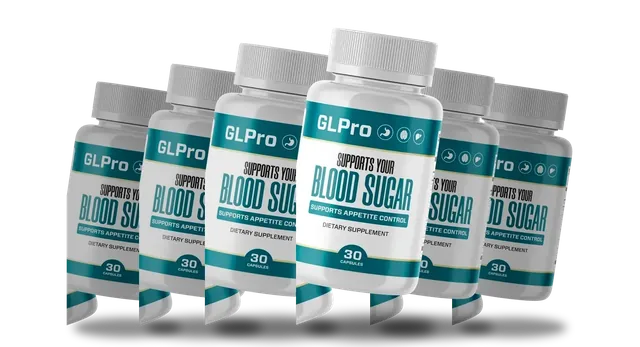
Order GLPro on the official website
Read both first if you like. The window is 60 days either way.
$49 to $79 a bottle · 60 days to change your mind
Order GLPro On The Official WebsitePaid once at the checkout · 60-day money-back guarantee · lot GLP-26/GL-5442