GLPro Official Website › Guides › Blood Sugar Supplement Guide
A Plain Guide to Blood Sugar Supplements
A blood sugar supplement is a food product, not a medicine. Its label may say it supports healthy glucose levels; it may not say it treats, prevents or manages diabetes. That one line decides everything else about how these products are sold, what their studies measure, and what a buyer can reasonably expect from one.
This guide covers what the category is, what a Supplement Facts panel must carry, what a proprietary blend may keep back, why descending order is the only clue it gives, where a claim has to stop, and what to do when a page names nothing.
What a blood sugar supplement is
A food product with rules attached, and the rules land on the label.
A blood sugar supplement is sold as a food rather than as a medicine. That is a legal category, not a marketing one, and it settles everything downstream: what the label may say, what has to be printed on it, what the seller must hold before printing it, and what a buyer is entitled to read before paying.
It also settles what does not happen. Nobody approves the product before it goes on sale, nobody reviews the claim before it is printed, and no trial of the finished capsule is required at any point in the process.
None of that makes the category worthless — it makes the label the document that matters, because the label is where the few binding rules land.
What a Supplement Facts panel must carry
Six requirements, and a buyer can check every one of them before paying.
| What must appear | What it looks like on the bottle |
|---|---|
| The heading | The words Supplement Facts, so the panel is distinguishable from a Nutrition Facts box. |
| Serving size and servings per container | How much counts as one serving, and how many servings the container holds. |
| Nutrients that have a Daily Value | The name, the quantitative amount by weight, and the percent Daily Value. |
| Every other dietary ingredient | The common or usual name, and the quantitative amount by weight per serving. |
| Ingredients with no established Daily Value | A symbol beside the entry pointing at a footnote reading Daily Value not established. |
| What the weight refers to | The weight of the dietary ingredient itself, not of a component of it or of the source it came from. |
The last row is the one most often misread. The rule is explicit that the declared weight is the weight of the dietary ingredient itself and not the weight of any component of it, or of its source, so a 500 mg extract is not 500 mg of the plant it was drawn from.
Everything else on the panel is arithmetic a buyer can do in the shop. Serving size times servings per container is the number of days the bottle really covers, and it does not always match the number on the front.
What a blend is allowed to withhold
It pools the milligrams. It keeps the names, and it keeps the order.
A proprietary blend is a lawful way to keep a recipe. The paragraph that governs one requires it to be identified by the term Proprietary Blend or by an appropriately descriptive or fanciful name, and requires the total weight of everything inside it to be printed on the same line.
Underneath that line the ingredients themselves are listed. The FDA restates it in plain English: indented beneath the name of the blend, you must list the other dietary ingredients in the blend, in a column or linear fashion, in descending order of predominance by weight.
So what a blend withholds is the individual milligram figures. It does not withhold the names and it does not withhold the order, and that distinction is worth holding onto: a blend is not a blank. A sales page that names nothing is telling a shopper less than the panel is required to.
Why descending order is the only clue a blend gives
A ceiling and a ranking, which is more than nothing and less than a number.
An order plus a total is more than it looks. The first ingredient named is the heaviest in the blend and the last is the lightest, and nothing inside the blend can weigh more than the total printed beside its name. That total is a ceiling on every line underneath it.
Worked through, that gives real limits. A 250 mg blend naming eight ingredients cannot hold 200 mg of the fourth one, because the three heavier ingredients would have to fit into the remaining 50 mg. A single-ingredient trial dose of a gram cannot be hiding inside a 250 mg blend at all.
What it cannot give you is a number. Nothing in the order says whether the first ingredient is 240 mg of that 250 or 40 of it, and two products with identical panels can differ tenfold in the line that matters most.
That is the honest summary of a blend: a ceiling and a ranking, both checkable in seconds — and no amounts.
What these labels are allowed to say
Support claims are permitted. Disease claims belong to drugs.
A supplement may carry a structure/function statement. The FDA describes one as a statement that may describe the role of a nutrient or dietary ingredient intended to affect the normal structure or function of the human body. Supports healthy glucose levels is this category’s version of it.
Those claims are not pre-approved. The manufacturer must hold substantiation that the claim is truthful and not misleading, and the rule requires the firm to notify the FDA within thirty days of first making one and to certify that it holds exactly that.
The line is the disease claim. The disclaimer beside a support claim has to say the product is not intended to diagnose, treat, cure or prevent any disease, because only a drug can lawfully make such a claim. A supplement that crossed the line would be regulated as a drug.
In practice, read the verbs. Supports, helps maintain and promotes sit inside the line. Lowers, controls, manages, reverses and prevents do not.
What the research in this category measures
Doses inside one ingredient vary more than buyers expect.
The research in this category is research on named ingredients. What any particular unlisted bottle contains is a separate question, and a page that names nothing has not answered it.
The single most useful fact for a label reader is the spread of the doses. Eleven randomised trials in 694 adults with type 2 diabetes used cinnamon at doses from 120 mg to 6,000 mg a day — a fiftyfold range inside one named ingredient, over four to sixteen weeks.
That is the argument for the amount column in one line. Two labels can name the same ingredient and be describing two entirely different products, and the only thing separating them is the number the panel is required to print.
The second guide sets out what the trials in this category actually measured and for how long, each with the ingredient it studied named beside the finding.
What a panel cannot tell you
What the document is, and the three things it is not.
A panel is a declaration, not a test result. It is what the manufacturer states is in the bottle, printed in the format the rule prescribes.
It is not a certificate of analysis, not a purity result and not proof that the amounts are accurate. The FDA does not review supplements for effectiveness before they enter the market, as it does for over-the-counter and prescription medicines.
It says nothing at all about whether the product works, either. A complete panel on a product with no evidence behind it is a complete panel and nothing more.
So read it for what it is: the list of what you are being asked to swallow, and how much of each. That is a great deal — and it is not everything.
What to do when a page names nothing at all
Five moves, in the order they become possible.
- Ask before you order. Write to the seller and ask for a photograph of the panel. A seller who will not produce one before payment has answered a different question.
- Read the bottle when it arrives. The panel on the container is the document, and it is newer than any web page describing it.
- Use the return window as the lever. A guarantee that runs from the date of purchase is what turns an unverifiable decision into a reversible one.
- Check the register. ClinicalTrials.gov lists registered studies and their results, and searching a product name takes a minute.
- Keep your own list. The FDA’s advice is to bring a list of every supplement and medicine you take, with the amounts, to every appointment.
None of those five is a substitute for a published panel. Together they are what is available to a buyer who wants one and has not been given one, and they are a good deal more than nothing.
How to read a panel in sixty seconds
Six checks, in an order that keeps the marketing until last.
- Find the serving size and the servings per container. Every other number on the panel is per serving.
- Multiply. Does the container really hold the number of days the pack claims?
- Find the blend line. Is there a total weight printed beside the blend name?
- Read the order. Which ingredient is named first, and which is named last?
- Check the footnote symbols. Which entries carry Daily Value not established?
- Only then turn back to the front of the label and read the claim.
The last step is deliberate. Read the claim after the numbers and it is much harder for the claim to colour how the numbers look, which is the one bias this whole exercise exists to defeat.
Who publishes this GLPro guide?
Four claims about how this website is written, chosen because a sceptical reader can audit every one of them in ten minutes:
- The bottle is the source. The two claim lines, the capsule count and the supply length come from the printed label and the seller’s own artwork. Prices come from the seller’s order page, read on a stated date, not from a review column.
- The gaps are marked, never filled in. The seller names no ingredient and prints no amount, so this website names none and estimates none, including in the structured data a search engine reads.
- Sources are real and linked in the sentence. Every study cited here was confirmed against its PubMed record before it was written down, and every government page was opened and checked by its title rather than assumed.
- Corrections change the date. Write to [email protected] and the review date at the foot of the page moves forward.
We earn when you buy. Glproformula is the Licensed U.S. retail desk — GLPro named at the top of this page, and this website makes money on orders placed through it. That is exactly why the missing-formula pages, the three-star reviews and the plain statement that GLPro is not a GLP-1 medicine are here: they are where our interest and yours pull apart, and you should be able to watch us choose.
Order support on +1 (720) 738-6364 and [email protected] handles tracking, changes, cancellations and refunds. It is not a sales line, and this website never presents it as a way to place an order: orders go through the checkout only.
Sources cited in this guide
- 21 CFR 101.36 - Nutrition labeling of dietary supplements. Electronic Code of Federal Regulations, Title 21, Part 101, Subpart C. https://www.ecfr.gov/current/title-21/chapter-I/subchapter-B/part-101/subpart-C/section-101.36
- 21 CFR 101.36(c) - Proprietary blends. Electronic Code of Federal Regulations, Title 21, Part 101, Subpart C. https://www.ecfr.gov/current/title-21/chapter-I/subchapter-B/part-101/subpart-C/section-101.36#p-101.36(c)
- U.S. Food and Drug Administration. Dietary Supplement Labeling Guide: Chapter IV. Nutrition Labeling. https://www.fda.gov/food/dietary-supplements-guidance-documents-regulatory-information/dietary-supplement-labeling-guide-chapter-iv-nutrition-labeling
- 21 CFR 101.93 - Certain types of statements for dietary supplements. Electronic Code of Federal Regulations, Title 21, Part 101, Subpart F. https://www.ecfr.gov/current/title-21/chapter-I/subchapter-B/part-101/subpart-F/section-101.93
- U.S. Food and Drug Administration. Structure/Function Claims. https://www.fda.gov/food/nutrition-food-labeling-and-critical-foods/structurefunction-claims
- Costello RB, Dwyer JT, Saldanha L, Bailey RL, Merkel J, Wambogo E. Do Cinnamon Supplements Have a Role in Glycemic Control in Type 2 Diabetes? A Narrative Review. J Acad Nutr Diet. 2016;116(11):1794-1802. https://pubmed.ncbi.nlm.nih.gov/27618575/
- U.S. Food and Drug Administration. Mixing Medications and Dietary Supplements Can Endanger Your Health. https://www.fda.gov/consumers/consumer-updates/mixing-medications-and-dietary-supplements-can-endanger-your-health
- U.S. National Library of Medicine. About ClinicalTrials.gov. https://clinicaltrials.gov/about-site/about-ctg
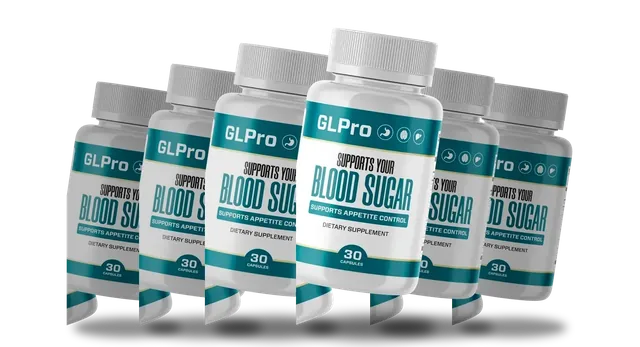
Order GLPro on the official website
60 days from the date of purchase, on every order size.
$49 to $79 a bottle · 60 days to change your mind
Order GLPro On The Official WebsitePaid once at the checkout · 60-day money-back guarantee · lot GLP-26/GL-5442