GLPro Official Website › Blog › Supports Blood Sugar: Where The Claim Has To Stop
Supports Blood Sugar: Where The Claim Has To Stop
A supplement label may say a product supports healthy blood sugar. It may not say the product lowers blood sugar, treats diabetes or replaces a medicine. That is not marketing softness: it is the line between a food claim and a drug claim, and it decides what anything in this aisle is allowed to promise you.
“Supports healthy blood sugar” appears on a great many cartons, and most shoppers read it as a softened version of “lowers blood sugar”. It is not a softened version of anything. It is a specific category of statement — with its own rule behind it, its own paperwork, and a hard limit on what it may imply. Knowing where that limit sits makes the whole aisle easier to read.
What blood glucose is, in plain terms
Blood glucose is the main sugar found in your blood and your body’s primary source of energy. It comes from what you eat and drink. When it rises, the pancreas releases insulin, and insulin is what helps the glucose get into cells to be used.
For someone with diabetes, typical targets are around 80 to 130 mg/dL before a meal, and those numbers belong to a care plan rather than to a shopping decision. For everyone else, the figure moves through a normal day with meals, sleep, activity and illness, which is the background any claim about supporting it is being made against. How GLPro is said to work is a separate question from what the words on the front are permitted to mean.
What a support claim is allowed to say
The category is called a structure or function claim. The FDA’s own description is that such a claim may describe the role of a nutrient or dietary ingredient intended to affect the normal structure or function of the human body. Supporting healthy blood sugar, supporting appetite control and supporting normal energy all sit in that box.
Two facts about these claims surprise people. They are not pre-approved by the FDA, so nobody at an agency read the sentence before it went on the carton. And the manufacturer must hold substantiation that the claim is truthful and not misleading — the evidence is supposed to exist on file rather than in public. The benefits page here stays inside the two lines the bottle prints for exactly that reason.
The disclaimer, and why it is there
The sentence at the foot of every page on this website is not decoration and it is not boilerplate this desk chose. The rule sets its text, its placement and its minimum type size: these statements have not been evaluated by the Food and Drug Administration, and this product is not intended to diagnose, treat, cure or prevent any disease.
Notification is not approval
The same rule requires a firm to notify the FDA within thirty days of first marketing a structure or function claim, and to certify that it has substantiation that the statement is truthful and not misleading. Notification is not approval, and nothing in the process produces a finding that the claim is correct. The disclaimer is there to say so on the label itself. This website carries it in full.
The line a supplement cannot cross
The rule permits structure and function statements provided they are not disease claims, and then states the consequence plainly: if a product marketed as a dietary supplement bears a disease claim, the product is subject to regulation as a drug. That is the whole line, in one sentence, and the paragraph that defines a disease is where the criteria live.
This is why a supplement may say it supports something and may not say it treats, prevents, manages or lowers a diagnosed condition. It is also why a product’s name matters as much as its claims — GLPro is not semaglutide, tirzepatide or any other GLP-1 medicine, and it is not a substitute for one. Nobody should stop, reduce or delay a prescribed medicine because a supplement has arrived in the post.
Three sentences, three rules
The quickest way to hold all of this is to take one product and write three sentences about it, then sort them. The first belongs on a label, the second is doing something the first is not allowed to do, and the third would change what the product legally is. The regulation draws the line between the rows, and the benefits page stays inside the first of them.
| The sentence | What kind of claim it is | What it would take to make it |
|---|---|---|
| Supports healthy blood sugar | A structure or function claim | Substantiation held by the maker, a notification to FDA, and the disclaimer on the label |
| Lowers blood sugar | Reads as a pharmacological effect | Evidence of that effect, and wording that does not imply treatment of a condition |
| Helps manage type 2 diabetes | A disease claim | Approval as a drug. A product marketed as a supplement bearing one is regulated as a drug |
| Replaces your diabetes medicine | A disease claim, and a dangerous one | Nothing makes this sayable about a supplement |
Read from 21 CFR 101.93 and the FDA’s own page on structure and function claims, both linked above. The first row is the only one a supplement label can carry.
Order GLPro on the official website
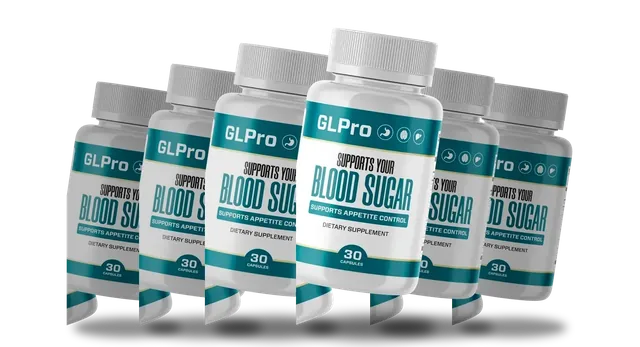
Sold by this desk as a once-daily capsule, 30 to a bottle, behind the claims printed on the carton and nothing beyond them. Two, three and six-bottle orders, all with 60 days to change your mind.
$49 to $79 a bottle · 60 days to change your mind
Order GLPro On The Official WebsitePaid once at the checkout · 30 capsules a bottle · lot GLP-26/GL-5442
Advertising is judged separately
Labels are one system and advertising is another, and the second one is stricter in an important way. The FTC’s health products guidance requires that claims about the health benefits of a product meet a substantiation standard of competent and reliable scientific evidence, and states that randomised controlled human clinical trials are the most reliable form of evidence and generally the type experts would require for a health benefit claim.
It closes one door that gets used a lot in a category full of botanicals: claims for products based on traditional use are subject to the same requirement of substantiation as any other product. Long use is a reason to study something, not a substitute for having studied it.
- The standard is competent and reliable scientific evidence, not testimony.
- Randomised controlled human trials are the form experts would generally want.
- A claim implied by a picture or a name is still a claim.
- Traditional use does not lower the bar.
- The evidence has to be about the claim being made, not about something nearby.
This desk has not seen any seller’s substantiation file and does not speculate about it. How these pages are written explains where the line falls and what is done when a figure is not on record.
What this bottle prints, and what the sales page prints
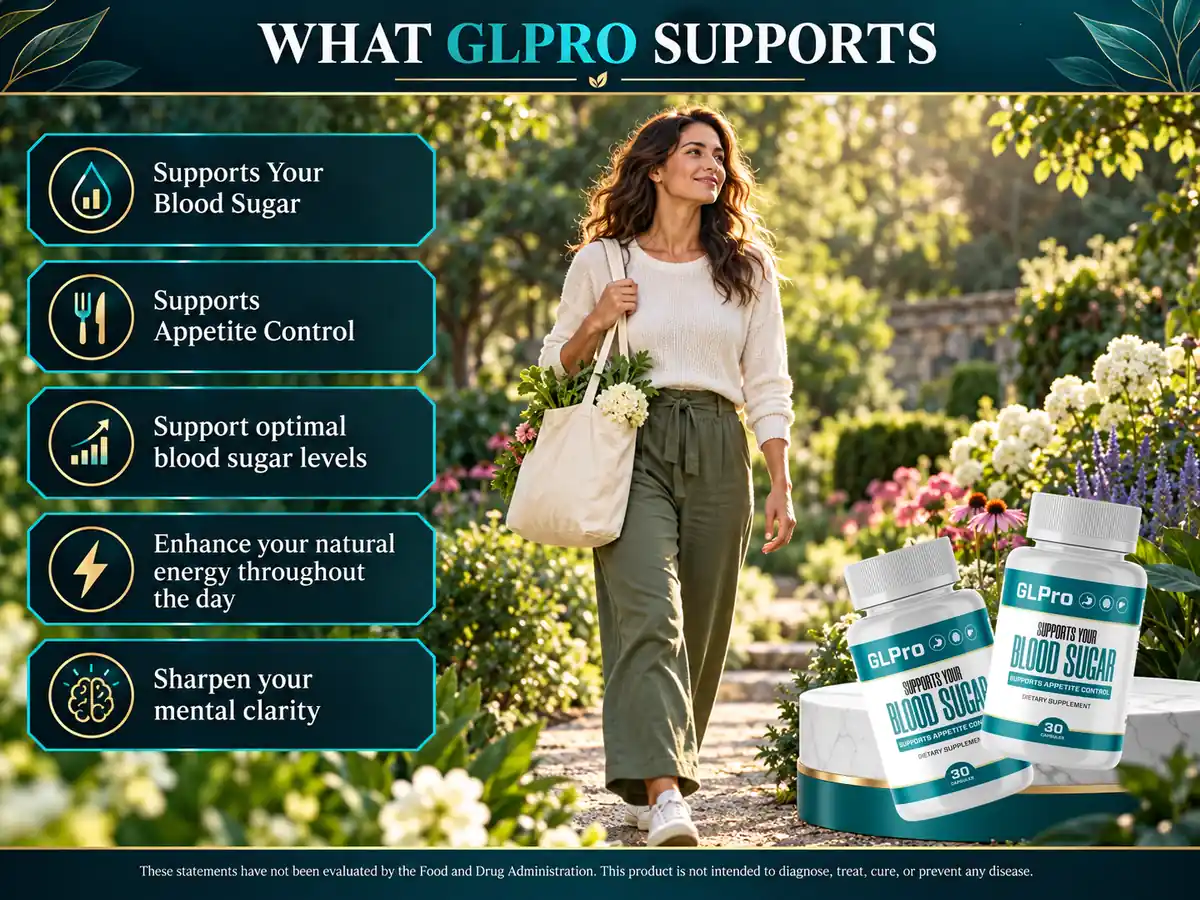
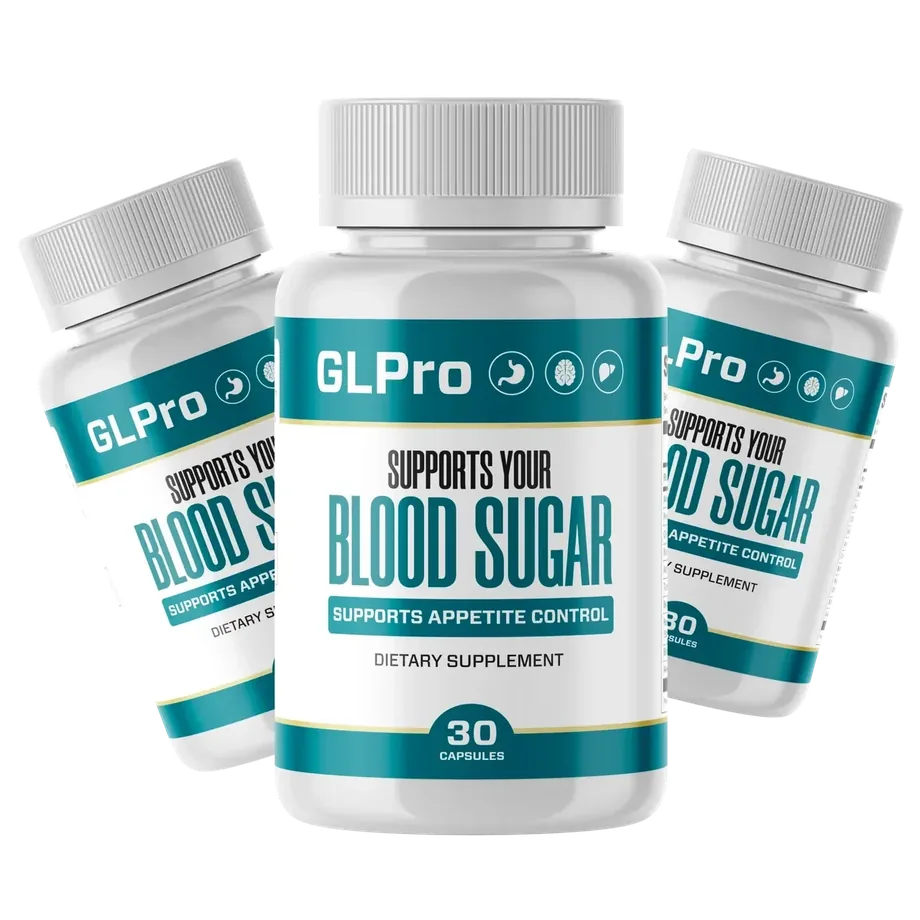
Two claim lines are printed on the main GLPro carton: Supports Your Blood Sugar and Supports Appetite Control. Those are the claims this website works from, and they are the ones a buyer can check against the object in their hand.
The seller’s own funnel goes further than the carton does, and the gap is worth seeing laid out rather than argued about. The wording below is quoted as the seller’s and attributed to the seller. It is not repeated anywhere on this website as a claim this desk makes. The label page prints both label versions in full.
| The wording | Where it appears | How it reads |
|---|---|---|
| Supports Your Blood Sugar | The front of the main bottle | A structure or function claim, carried with the FDA disclaimer |
| Supports Appetite Control | The front of the main bottle | A structure or function claim about a normal function |
| Support Blood Sugar · Natural GLP-1 Booster | A second label version in the same pack | The seller’s wording. Nothing published explains what in the capsule it refers to |
| Support optimal blood sugar levels | The seller’s listing artwork | A support claim, printed beside two others that are not on the bottle |
| The Unique Solution That Improve Healthy Glucose Levels and Natural Weight Loss | The seller’s sales page | Quoted here as the seller’s, and not repeated by this desk as a claim |
The first two rows are printed on the bottle. The rest are the seller’s own marketing, attributed rather than adopted.
What a support claim is not
The most useful thing to know about “supports healthy blood sugar” is what it is not competing with. The NIDDK’s guide to managing diabetes describes an A1C test showing average blood glucose over the previous three months, a goal for most people of below 7%, and blood pressure, cholesterol and smoking alongside it. Its framing sentence is to work with your health care team to create a plan that works for you.
On the supplement question specifically, NCCIH is direct: it is very important not to replace medical treatment for diabetes with an unproven health product or practice. A support claim is a statement about a normal function in a healthy adult. It is not a second opinion, a smaller dose of something, or a step on the way to a treatment, and the page on who this is for says who should leave it alone entirely.
- A support claim describes a role in a normal structure or function of the body.
- It is not pre-approved. The maker is required to hold substantiation for it.
- The disclaimer is required text, in a required place, at a required size.
- A disease claim on a supplement makes the product regulable as a drug.
- Advertising is judged against competent and reliable scientific evidence, traditional use included.
This is a dietary supplement and nothing on this page describes a treatment for diabetes or prediabetes. Insulin, sulfonylureas and meglitinides act directly on blood glucose, and a formula that is not published cannot be compared against them. Take the bottle to the clinician who manages your prescription, and change nothing about that prescription on your own.
Sources cited in this article
- 21 CFR 101.93 - Certain types of statements for dietary supplements. Electronic Code of Federal Regulations, Title 21, Part 101, Subpart F. https://www.ecfr.gov/current/title-21/chapter-I/subchapter-B/part-101/subpart-F/section-101.93
- U.S. Food and Drug Administration. Structure/Function Claims. https://www.fda.gov/food/nutrition-food-labeling-and-critical-foods/structurefunction-claims
- Federal Trade Commission. Health Products Compliance Guidance. December 2022. https://www.ftc.gov/business-guidance/resources/health-products-compliance-guidance
- MedlinePlus, U.S. National Library of Medicine. Blood Glucose. https://medlineplus.gov/bloodsugar.html
- National Institute of Diabetes and Digestive and Kidney Diseases. Managing Diabetes. https://www.niddk.nih.gov/health-information/diabetes/overview/managing-diabetes
- National Center for Complementary and Integrative Health. Diabetes and Dietary Supplements: What You Need To Know. https://www.nccih.nih.gov/health/diabetes-and-dietary-supplements-what-you-need-to-know
Order GLPro on the official website
One capsule a day, 30 to a bottle, with 60 days from the purchase date to ask for the money back.
$49 to $79 a bottle · 60 days to change your mind
Order GLPro On The Official WebsitePaid once at the checkout · 60-day money-back guarantee · lot GLP-26/GL-5442