GLPro Official Website › Blog › What A Supplement Panel Must Print, And What A Blend Pools
What A Supplement Panel Must Print, And What A Blend Pools
Every supplement sold in the United States carries a Supplement Facts panel, and the rules behind it are specific: a serving size, a servings count, and for each dietary ingredient a common or usual name with a weight per serving. A proprietary blend may pool those weights into one total. It may not drop the names, and it may not reorder them.
The panel on the back of a supplement bottle is the only part of the packaging written to a federal template — everything else on the carton is marketing, working inside the claims rules. The panel has a fixed heading, a fixed running order and a short list of things it may not leave out.

What a Supplement Facts panel has to carry
A panel opens with the words Supplement Facts, states the serving size and how many servings the container holds, then lists what one serving contains. That much is fixed by the federal labelling rule for dietary supplements. This desk reads the printed bottle against those requirements on the label page.
Ingredients that carry a Daily Value get three things on the same line: the name, the quantitative amount by weight, and the percentage of that Daily Value. Botanicals and the other dietary ingredients get two of the three, because no Daily Value exists for them. They are declared by their common or usual name with the amount by weight per serving, beside a symbol pointing at a footnote reading “Daily Value not established”.
The weight printed is the ingredient, not its source
One clause is easy to read past, and it changes how a row should be read. The weight declared beside an ingredient is the weight of that dietary ingredient itself, not the weight of any component of it or of the source it came from. A row printing a plant part and a weight is a narrower statement than it first looks.
What a proprietary blend is allowed to pool
A proprietary blend is a named group of ingredients sharing one printed weight, and the paragraph that governs them is short and specific. The blend is identified by the term Proprietary Blend or by a descriptive or fanciful name, and the figure beside that name is the total weight of all the other dietary ingredients inside it.
Indented underneath the blend name, the ingredients are listed in descending order of predominance by weight. The FDA’s own labelling guide restates that in plainer language, in a column or in a line. So a blend withholds the individual amounts — it does not withhold the names, and it does not get to shuffle them. Our ingredients page is built around that distinction.
| The element | Inside a proprietary blend | On an ordinary panel row |
|---|---|---|
| The ingredient’s name | Printed, indented beneath the blend’s own line | Printed, by its common or usual name |
| The amount of that one ingredient | Pooled into the blend total, not shown on its own | Printed as a weight per serving |
| The order the names appear in | Descending order of predominance by weight | Set by the panel’s own required order |
| A combined weight | Printed on the same line as the blend name | Does not arise |
| Percent Daily Value, where one is established | Still printed against the individual nutrient | Still printed |
| The footnote for anything with no Daily Value | A symbol pointing at “Daily Value not established” | The same symbol and the same footnote |
Read from 21 CFR 101.36 and the FDA’s restatement of it, both linked above.
Descending order, and what it quietly tells you
Descending order of predominance survives the pooling, and it is the part of a blend most shoppers skim. The first name under the blend line is the heaviest thing in it and the last is the lightest. Nothing lets a maker lead with the ingredient it would rather you noticed.
What the order will not tell you is the size of the gaps between the names, and the gaps are where the interesting part usually sits. One blend might be almost entirely its first ingredient; another might be five roughly equal parts. Both print the same list in the same sequence. The FDA guide linked above remains the clearest statement of what that sequence does and does not promise, and our checklist for this category treats it as a starting point rather than an answer.
- The first name is the heaviest single ingredient in the blend, by weight.
- The last name is the lightest, worth knowing when a marketing page leads with it.
- Every name inside the blend is disclosed, in that order, even though the amounts are not.
- The sequence says nothing about how far apart the names are.
The blend total is a ceiling
The most useful number on a blended panel is the total printed on the blend’s own line, because the rule defines it as the combined weight of everything inside. That makes it a ceiling: no ingredient can weigh more than the blend does, and with several names sharing the figure, each is well under it.
That is the arithmetic worth doing before buying anything in this aisle. Take the blend total, count the names sharing it, then look up what published research on whichever of those names interests you actually used. If the ceiling sits below the amounts the research ran at, the comparison has answered the question for you. The same method is laid out step by step in our guide to this category.
A blend withholds the individual milligrams and publishes the names, the order and a total. A product that publishes no panel at all is not exercising the blend rule — there is simply nothing on record to read. Keeping those apart is the difference between a fair criticism and a lazy one.
Order GLPro on the official website
GLPro is sold by this desk in two, three and six-bottle orders, one capsule a day and 30 capsules to a bottle. Every order carries the same 60-day money-back window from the date of purchase.
$49 to $79 a bottle · 60 days to change your mind
Order GLPro On The Official WebsitePaid once at the checkout · 30 capsules a bottle · lot GLP-26/GL-5442
What the GLPro bottle prints
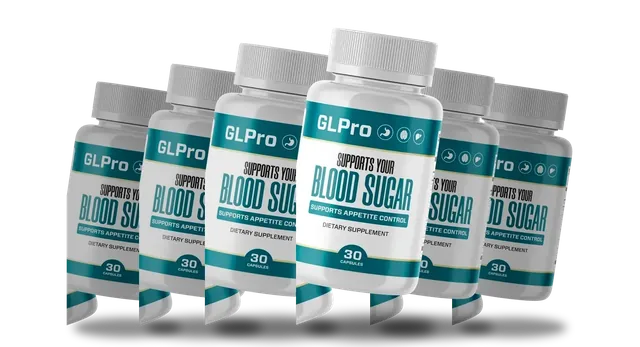
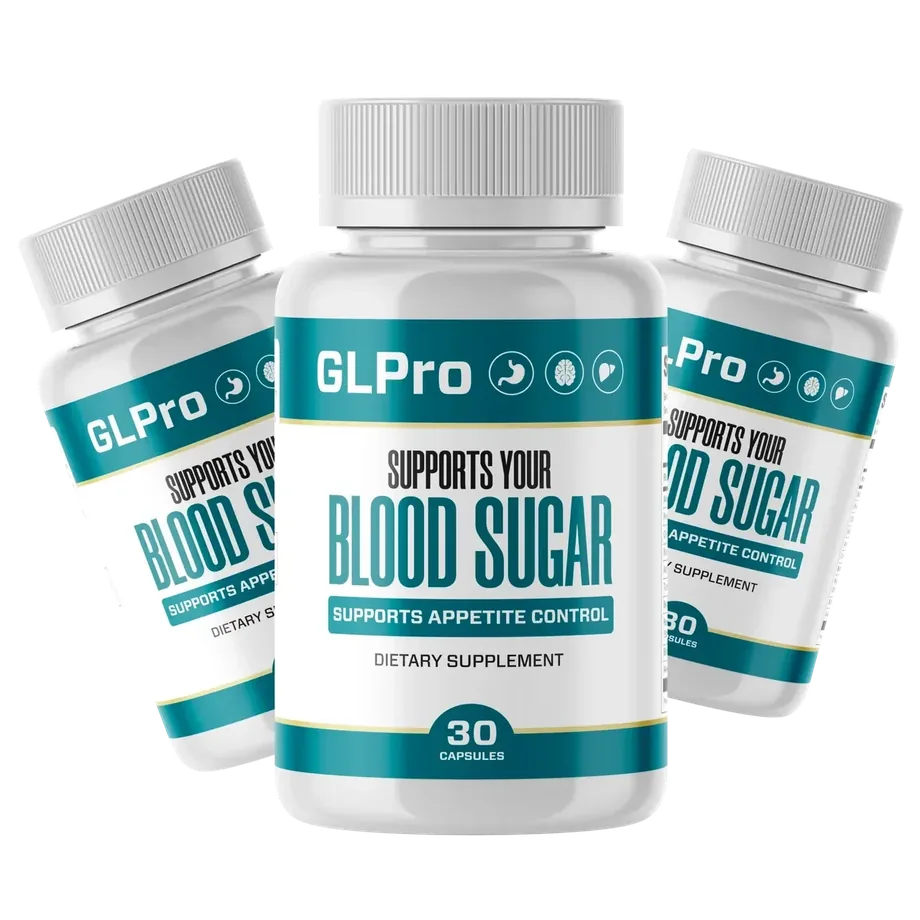
The front of the bottle reads GLPro, Supports Your Blood Sugar, Supports Appetite Control, Dietary Supplement, 30 Capsules. A second artwork version ships in the same pack and reads Support Blood Sugar and Natural GLP-1 Booster. Thirty capsules sold as a month fixes the routine at one a day, and the lot, GLP-26/GL-5442 on the bottles that leave this desk, is stamped on the base rather than printed on the front.
About the formula, the seller publishes one phrase: “a proprietary blend of natural ingredients”. No name, weight or combined total appears in the material this desk can read, so the descending-order rule above has nothing to act on here, and this website prints no list rather than estimating one. The standing advice to take no more than the label recommends assumes a label with an amount on it, so follow the directions printed on your own bottle and read how to take GLPro.
Reading a panel in two minutes
Whatever you end up buying in this category, the same short pass works on any panel and takes about as long as reading a nutrition label on a cereal box.
- Find the serving size and the servings per container. A panel written per two capsules reports double what one capsule delivers.
- Read the names before the numbers. Blend or no blend, the names cannot be withheld.
- Look for a blend line. If there is one, note its total and count the names indented beneath it.
- Check which rows carry a percent Daily Value and which carry the footnote symbol instead. The footnote is not a warning — it means no Daily Value exists.
- Read the other-ingredients line under the panel. The capsule shell, the flow agents and the allergen statement live there rather than in the panel.
- Compare the amounts against published research on the one or two ingredients you care about, and ignore the rest of the label while you do it.
None of that needs expertise, and it beats reading a sales page. MedlinePlus’s page on supplements adds the step most people skip, which is telling whoever manages your prescriptions what you have started. Anything in this aisle is worth mentioning at the next appointment, and our safety page says why.
What a panel still cannot tell you
A panel is a disclosure, not a test result. The maker writes it, and no government office checks the figures before the bottle ships. The FDA states plainly that it does not review supplements for effectiveness before they enter the market, the way it does for over-the-counter and prescription medicines. That describes how the category is regulated, and our testing and quality page takes the same line.
| A buyer’s question | Answered by the panel? | Where the answer actually comes from |
|---|---|---|
| What is in this capsule | Yes | The names on the panel, blend or no blend |
| How much of each | Usually | The weight per serving, unless a blend pools it |
| Are those printed amounts accurate | No | A laboratory test on the lot the bottle came from |
| Is it free of anything I react to | Partly | The allergen line and the other-ingredients line |
| Does the ingredient do anything | No | Published research on that named ingredient |
| Has this finished product been studied | No | A public trial register, searched by product name |
A panel is a disclosure written by the maker. Four of these six sit outside it.
What to do when no panel is published
Plenty of sellers publish artwork rather than a panel, which leaves a shopper with moves rather than an argument. All four beat guessing at a list.
- Ask the order desk for a photograph of the back of the bottle before you buy. This desk answers that with what it holds, and says so when it holds nothing.
- Read the bottle when it arrives. The printed carton is the label the rule addresses, and it can carry more than a website does.
- Search a public trial register for the finished product by name. ClinicalTrials.gov is free and covers finished products rather than single ingredients.
- Diarise the refund window on the day the parcel arrives. The 60-day window is a promise to you rather than a claim about the capsule.
Nothing here is a treatment for diabetes or prediabetes, and no supplement replaces a prescribed medicine. Insulin, sulfonylureas and meglitinides can drive blood glucose low on their own, and a formula nobody has published cannot be checked against them ingredient by ingredient. If you take any of those, speak to the prescriber before adding a capsule to the routine.
Sources cited in this article
- 21 CFR 101.36 - Nutrition labeling of dietary supplements. Electronic Code of Federal Regulations, Title 21, Part 101, Subpart C. https://www.ecfr.gov/current/title-21/chapter-I/subchapter-B/part-101/subpart-C/section-101.36
- 21 CFR 101.36(c) - Proprietary blends. Electronic Code of Federal Regulations, Title 21, Part 101, Subpart C. https://www.ecfr.gov/current/title-21/chapter-I/subchapter-B/part-101/subpart-C/section-101.36#p-101.36(c)
- U.S. Food and Drug Administration. Dietary Supplement Labeling Guide: Chapter IV. Nutrition Labeling. https://www.fda.gov/food/dietary-supplements-guidance-documents-regulatory-information/dietary-supplement-labeling-guide-chapter-iv-nutrition-labeling
- MedlinePlus, U.S. National Library of Medicine. Dietary Supplements. https://medlineplus.gov/dietarysupplements.html
- U.S. Food and Drug Administration. Mixing Medications and Dietary Supplements Can Endanger Your Health. https://www.fda.gov/consumers/consumer-updates/mixing-medications-and-dietary-supplements-can-endanger-your-health
- U.S. National Library of Medicine. About ClinicalTrials.gov. https://clinicaltrials.gov/about-site/about-ctg
Order GLPro on the official website
One capsule a day, 30 to a bottle, with 60 days from the purchase date to ask for the money back.
$49 to $79 a bottle · 60 days to change your mind
Order GLPro On The Official WebsitePaid once at the checkout · 60-day money-back guarantee · lot GLP-26/GL-5442